Maths, Oceans & International Collaboration: Paul Vigneaux at PIMS 2025–26
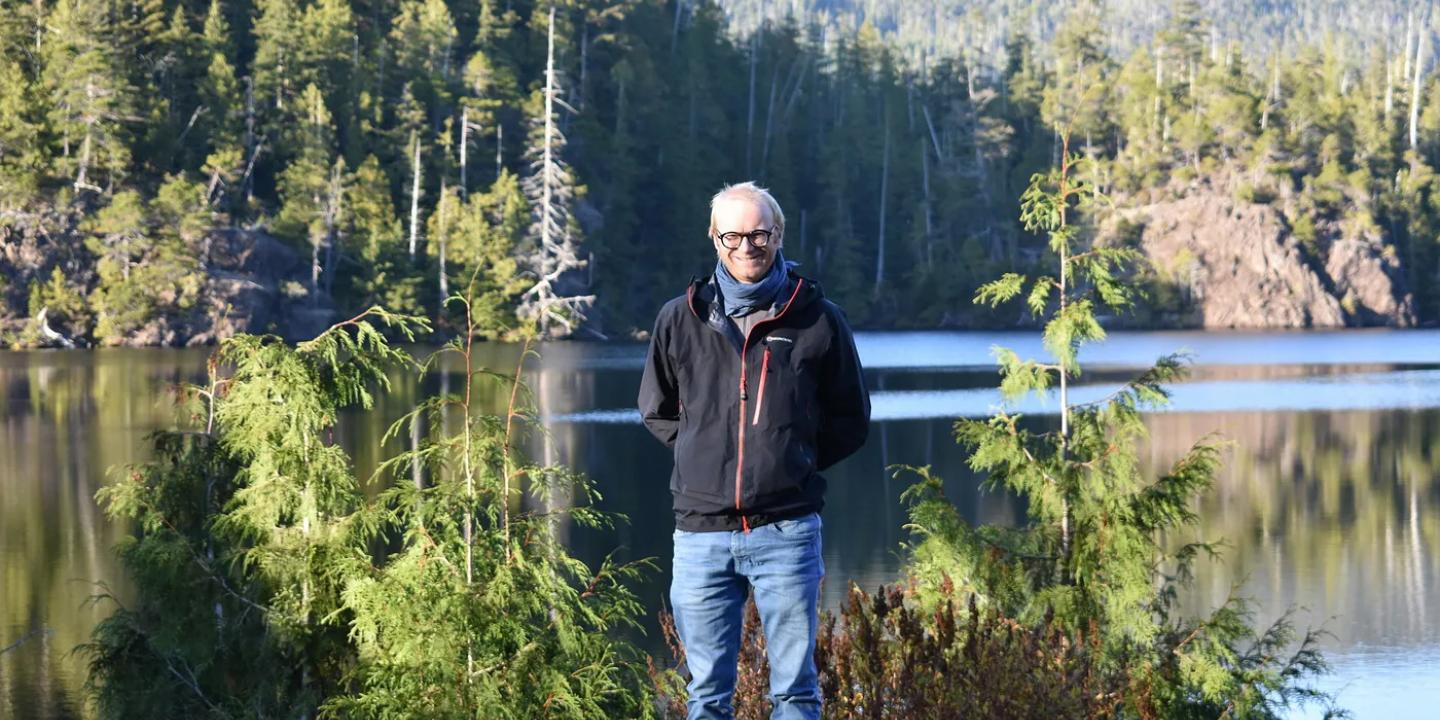
We are pleased to highlight the latest contribution to the Maths & Oceans series by Paul Vigneaux, published under the umbrella of CNRS Mathematics. The article, titled “Maths & Oceans #2: Mascaret, the Tidal Bore”, explores the remarkable natural phenomenon of tidal bores through the lens of applied mathematics and geophysics. This contribution reflects both Paul’s long-standing scientific expertise and his strong commitment to science communication at the interface of mathematics, physics, and natural phenomena.
Why the Tidal Bore? A Perfect Meeting of Nature and Mathematics
Paul was invited by CNRS Mathematics to write for the Maths & Oceans series, which showcases how mathematical research helps us understand oceanic and coastal phenomena. For him, the mascaret (tidal bore) was an obvious choice.
The tidal bore is a striking wave that travels upstream against the river current under specific tidal conditions. Visible on rivers such as the Garonne, Dordogne, Seine, and in global locations including the Amazon, Qiantang (China), and Sumatra, it is both a spectacular natural event and a serious geophysical process with implications for erosion, navigation, and flood risk.
As Paul explains through accessible yet rigorous mathematical modeling, tidal bores are best understood as hydraulic jumps enriched by dispersive wave effects—a vivid example of how advanced mathematics interacts with real-world physics. The article also highlights how similar mathematical tools are applied far beyond geophysics, including in optical fiber communications, semiconductors, and plasma physics.
This work embodies exactly what the Maths & Oceans series aims to promote:
A dialogue between mathematics and the physical world, where theory, observation, and simulation come together.
Leading National Research at the Math–Geophysics Interface
Beyond this publication, Paul currently serves as the scientific lead of the French National CNRS Research Network “MathGeoPhy” (2019–2028). This network is dedicated to fostering collaboration between mathematicians and geophysicists across France, supporting research that ranges from coastal processes and ocean dynamics to natural hazards and Earth system modeling.
Over the years, Paul has also authored and edited numerous popular science articles aimed at bringing mathematical approaches to broader audiences, particularly in relation to industry and environmental physics.
At PIMS in Vancouver for the 2025–26 Academic Year
We are equally delighted to announce that Paul will be in residence at the Pacific Institute for the Mathematical Sciencesat the University of British Columbia for the full 2025–26 academic year (September to August) through a CNRS delegation.
His presence at PIMS will strengthen existing research ties between France and Western Canada, particularly in the areas of:
- Applied mathematics
- Geophysical and oceanographic flows
- Mathematical modeling of natural hazards
Looking Ahead: Canada-France-Chile Ocean Research Connections Workshop – February 2026
During his stay in Vancouver, Paul will participate in the Canada-France-Chile Ocean Research Connections Workshop, planned for February 2026. This 5-day international event aims to further strengthen marine research collaboration and partnerships between Canada, France, and Chile. It will bring together oceanographers, marine ecologists, and mathematical scientists from all three countries to articulate a shared vision for enhanced ocean observing and experimental systems across the eastern Pacific Rim. The goal is to stimulate new cross-national and cross-disciplinary research partnerships and to define shared research priorities that can inform joint projects and major international funding proposals.
PIMS is proud to support and participate in this international hub for mathematical sciences and interdisciplinary research.